
Your Cart is Empty

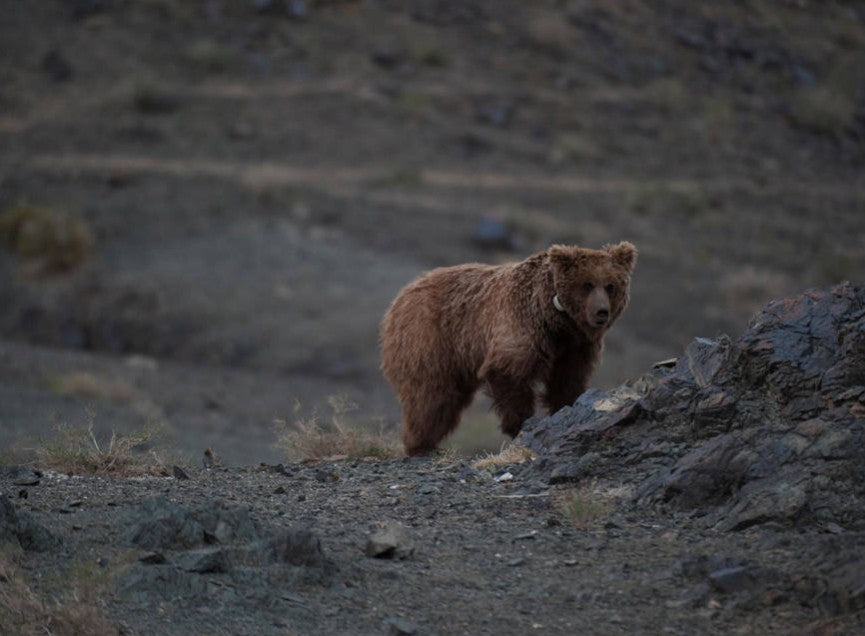
You’re looking at the only bear in the world that spends its whole life in a desert. The Gobi bear is found in the Mongolian part of the Gobi desert – and nowhere else. It was first discovered over 75 years ago, but scientists still don’t know much about it. It’s thought there may be fewer than 40 bears living in the Gobi. Can these incredibly rare bears continue to exist in this extreme environment?
The Gobi bear (or mazaalai, as it’s called in Mongolian) is a subspecies of the brown bear. Brown bears are found across North America, Central Asia and Europe (but not the UK). The Gobi bear is different from other subspecies of brown bear in several ways:

Image © Eric Dragesco/naturepl.com
Gobi bears live in a part of the desert called the Great Gobi Strictly Protected Area (GGSPA). This is one of the world’s largest nature reserves, but it’s a tough place to be. Gobi bears are forced to travel large distances across the dry, dusty desert in search of an oasis. Here, they have a chance of finding food and water – the bear necessities of life!
Because there are so few of them, Gobi bears are in great danger of becoming extinct. Anything that threatens their survival can have a huge impact, such as:

A remote camera captures a Gobi bear in a waterhole.
Image: National Geographic Image Collection / Alamy Stock Photo
The Gobi Bear Project is helping the government of Mongolia to protect its Gobi bears by:
 Exciting news: scientists think the number of Gobi bears in the GGSPA could be slowly increasing! If these super tough mazaalai can survive in this harsh habitat, then maybe – with our help – the Gobi desert will be home to them for many more years to come.
Enjoyed reading this feature? Find out more about incredible Gobi animals in issue 53, The Gobi Desert!
Comments will be approved before showing up.

This competition asked you to design a secret egg hidden somewhere in nature, and your entries went far beyond the obvious nests and burrows. Eggs arrived disguised as pine cones, floating on leaf boats, perched on volcano ledges, tucked into cloud cover and even masquerading as chocolate Easter eggs to fool foxes. Thank you to every reader who took up the challenge and thought like a parent bird, fish, reptile or imaginary creature trying to keep their precious egg safe.

We were swept away by the response to this competition. Letters arrived from rivers across the world – the Thames, the Mississippi and many more unnamed waterways – each one brimming with personality, passion and a genuine love of the natural world. You gave your rivers voices that were worried, hop...

Somewhere beneath a grassy field right now, a tiny insect is building an underground loudspeaker. Male mole crickets engineer horn-shaped burrows that amplify their calls hundreds of metres into the night air – and your child can recreate the same science at home using nothing but cardboard and a phone. This hands-on experiment explores sound, shape and natural engineering in a way that is genuinely surprising. No screens, no special equipment, just a brilliant idea borrowed from nature.


Volker Schweisfurth
May 26, 2020
25 years ago in Mongolia, two scientists from WWP gave me a piece of Gobi bear droppage that I kept until today. What a souvenir!