Your Cart is Empty

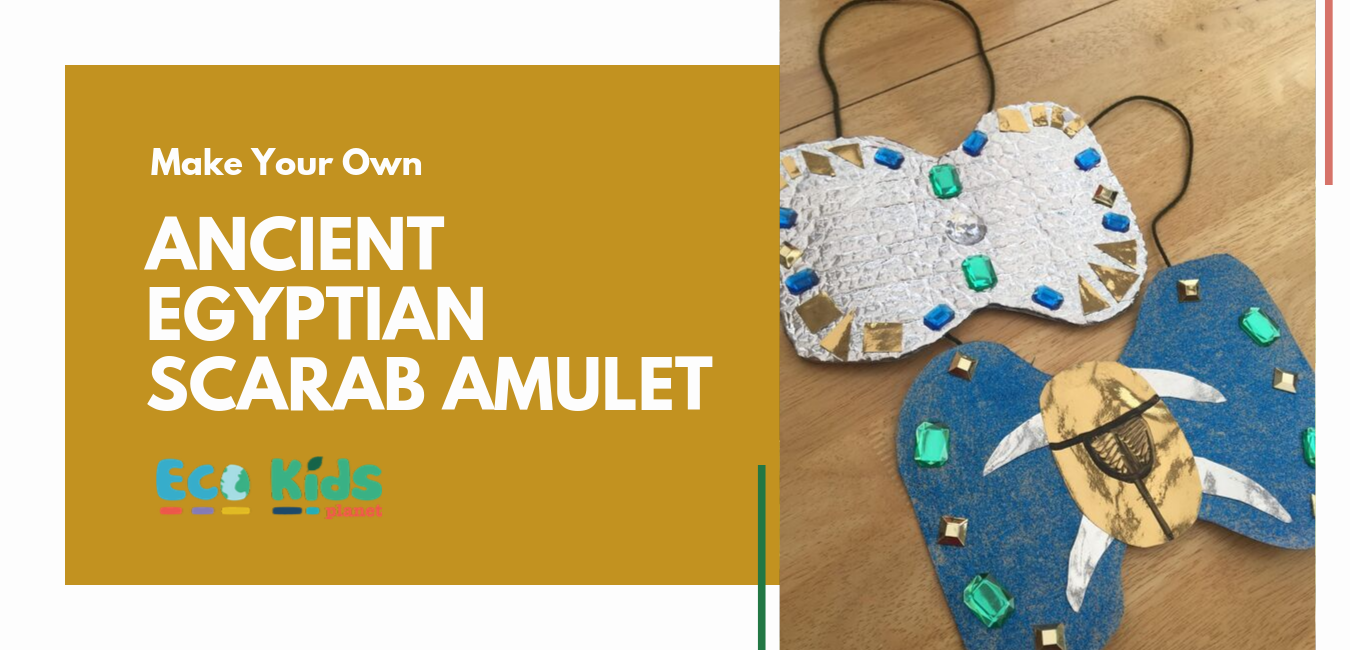
The Egyptian scarab was one of the most sacred amulets in Ancient Egypt. The scarab represented new creation and eternal life and was thought to give protection against evil. These amulets were carved out of stone or moulded in glass or Egyptian ceramic. They were everywhere: worn on necklaces, carved in buildings and used in seals.
Step 1: Draw the shape of your amulet on to the cardboard. Cut this out.
 Step 2: Paint your template using your favourite colour. This may take a couple of layers. Leave to dry.
 Step 3: Use your leftover cardboard to make a leg template, this will ensure all of the beetle’s legs are the same. Draw four legs on to the silver paper, making sure you have two facing left and two facing right. Cut these out.
 Step 4: Draw and cut the oval body of the scarab beetle from your gold paper. Use your marker pen to add the beetle’s markings.
 Step 5: Glue these to the centre of your amulet. They may need something heavy to rest on top for 10 minutes to help glue them into place.
 Step 6: Cut out different shapes from your silver and gold paper. Stick these, alongside your gemstones, on to the amulet for decoration. What patterns will you create? Make sure you leave this to dry completely.
 Step 7: Cut your string to approximately 30cm. Secure this to the back of your amulet with sticky tape. Ta-da! You’re all done! Don’t you look fantastic wearing your new amulet?
Comments will be approved before showing up.

Thank you to everyone who sent in an entry for the African Animal Postcard competition, published in our Wild Africa: A Continent in Motion issue. You sent us postcards from every corner of Wild Africa – Ethiopian wolves hunting mole rats through mountain mist, flamingo chicks marching across soda l...

You've been designing brilliant new contenders for the Astonishing Amazon Animal Showdown – piranhas with jaws that regrow in whole quarters, a hoatzin that ferments its dinner in a throat pouch, a tailless whip scorpion that senses danger through its legs, and a jaguar with one of the most powerful bites of any mammal. Thank you to every reader who did the research and made the case for their champion.