Your Cart is Empty
 The greatest thing about autumn? All the beautiful colours! It's also a very exciting time to see lots of animals out and about making their winter preparations. For our ‘Underground Life’ issue, we encouraged you to go outside and get snapping with a camera. We’ve got to admit, our readers have a great eye for photography. Look at these super shots!
 Isaac, age 8, Leigh on Sea - Jay

Lara, age 9, Maybole - Peacock Butterfly

Sage, age 5, London - Twisted Tree

Tiarnan, age 7, Seascale - Water of a Swan's back

Eben, age 6, St. Bees - Bright Berries

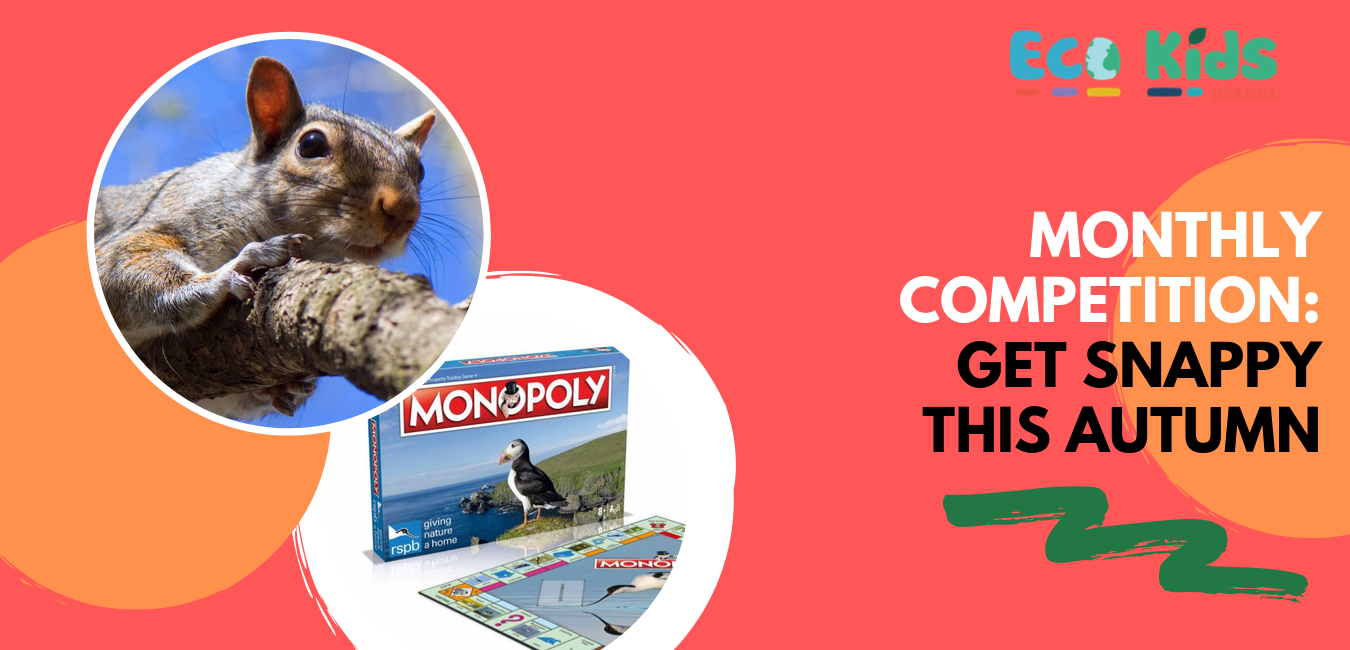
Congratulations you've all won the new, exclusive RSPB version of Monopoly.
 It’s the traditional game you know and love, but instead of buying Mayfair or Old Kent Road, you work your way around the board, collecting stunning bird sites and visiting habitats such as woodlands, wetlands and coastal regions. You also add bird watching hides and visitor centres as you go. Ideal for two to six players, ages eight and up.
RRP £34.99
Available at: rspbshop.co.uk 
Daniel, age 6, Cork, Ireland - Leopard Slug

Uilliam, age 11, County Down - Ground beetle

Lottie & Jake, Needham Market - Golden leaves

Dalila, age 7, Croydon - Swans and Gulls

Matthew, age 11, Cumbria - Dragonfly

Shiloh, age 7, Cardiff - Grey Squirrel

Mohammed, Mushrooms

Kerry, age 8, Walsall - Swan

Eden, age 8

Izaac, age 8, West Sussex - Bird collecting nesting material

Finbarr, age 5, Seascale - Swans on the lake 
Isabella, Milton Keynes - Swallowtail butterfly

Comments will be approved before showing up.

You've been designing brilliant new contenders for the Astonishing Amazon Animal Showdown – piranhas with jaws that regrow in whole quarters, a hoatzin that ferments its dinner in a throat pouch, a tailless whip scorpion that senses danger through its legs, and a jaguar with one of the most powerful bites of any mammal. Thank you to every reader who did the research and made the case for their champion.


This competition asked you to design a secret egg hidden somewhere in nature, and your entries went far beyond the obvious nests and burrows. Eggs arrived disguised as pine cones, floating on leaf boats, perched on volcano ledges, tucked into cloud cover and even masquerading as chocolate Easter eggs to fool foxes. Thank you to every reader who took up the challenge and thought like a parent bird, fish, reptile or imaginary creature trying to keep their precious egg safe.