Your Cart is Empty

There are over 20,000 species of butterfly, found all across the world, except Antarctica. They change their appearance four times during their lifetime and brighten up our gardens, but how much do you know about them? How do they eat? Can they really make their own glue? And which is the biggest? We reveal all…
 Butterflies’ taste receptors are on their legs. They are similar to our mouth taste buds but theirs are 200 times stronger! Butterflies use these receptors to test whether plants are poisonous. They drum the leaves with their feet until the plant releases its juices. Spines on the back of a butterfly’s legs detect the correct match of plant chemicals. When they identify the right plant, a female butterfly lays her eggs. This stops her from laying her eggs anywhere dangerous.
Butterflies lay 100–300 eggs on average. Their eggs are typically attached to a plant (usually the leaf) with special glue. Their glue is super-strong! It works so well that you can’t remove an egg from a leaf without destroying the egg itself.

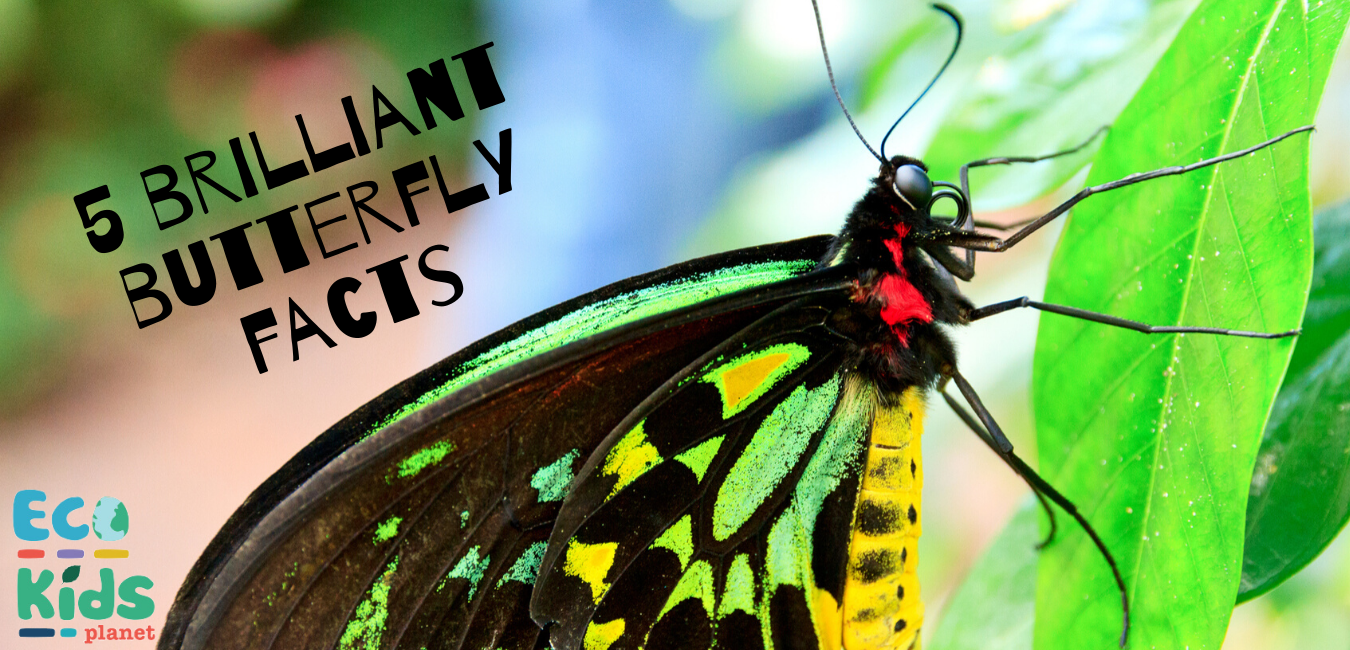
The world’s largest butterfly, the Queen Alexandra’s birdwing, has a wingspan of up to 28cm – almost as long as a school ruler! Because the Queen Alexandra’s birdwing’s range is so small, it is easily affected by local disturbances. In the 1950s, a large part of its natural habitat was destroyed by a volcano. Today, its habitat is being impacted by palm-oil plantations.

 This beauty flies approximately 5,000km – each way! Every year, millions of monarch butterflies set off from their breeding grounds in north-eastern USA and Canada. Taking advantage of air currents, they travel all the way to north-eastern Mexico and spend the winter huddled together in the branches of fir trees.
The butterflies that make it to Mexico don’t live long enough to make the full return journey. On their way back north, they mate and lay their eggs on milkweed plants in Texas. When these hatch, the next generation continues the journey. It takes four or five generations of butterflies to get all the way back home to Canada!
 Adult butterflies can only feed on liquids (usually nectar). Their mouthparts have evolved to enable them to drink, but they can't chew solids. Their proboscis (which is a bit like a drinking straw) stays curled up under the butterfly's chin. When they find a source of nectar or other liquid nutrition, the proboscis unfurls and sucks up the meal! Some species of butterfly feed on sap, while others sip on rotting fluids from carrion (dead animals – yuck!). No matter what their meal is, they suck it up through a straw.
Want to attract butterflies in your garden?Have a go at making one of our butterfly feeders here.

Comments will be approved before showing up.

Thank you to everyone who sent in an entry for the African Animal Postcard competition, published in our Wild Africa: A Continent in Motion issue. You sent us postcards from every corner of Wild Africa – Ethiopian wolves hunting mole rats through mountain mist, flamingo chicks marching across soda l...

You've been designing brilliant new contenders for the Astonishing Amazon Animal Showdown – piranhas with jaws that regrow in whole quarters, a hoatzin that ferments its dinner in a throat pouch, a tailless whip scorpion that senses danger through its legs, and a jaguar with one of the most powerful bites of any mammal. Thank you to every reader who did the research and made the case for their champion.