Your Cart is Empty


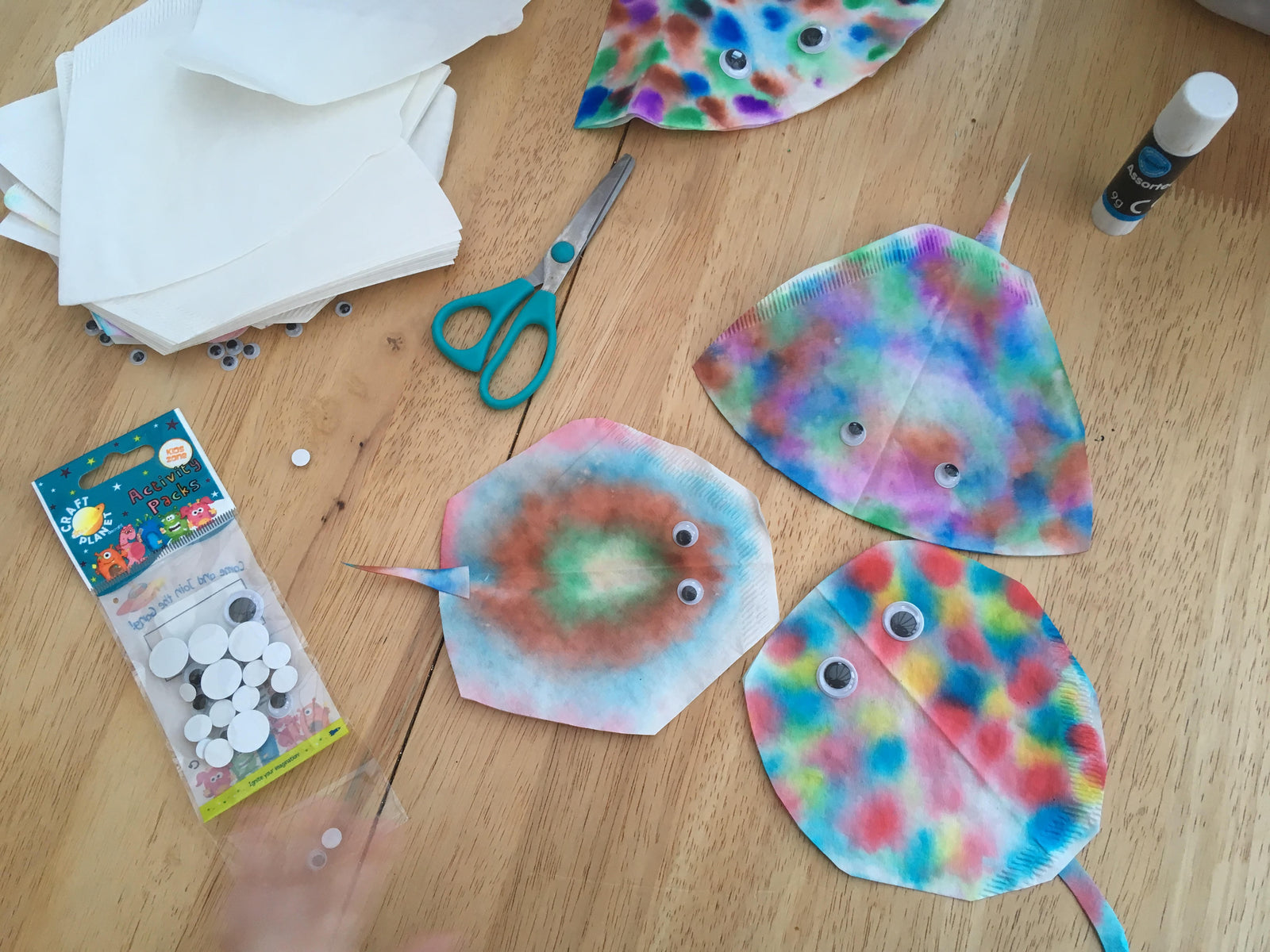
Step 1: Fold your filter paper in half.

Step 2: Using different coloured dabbers or pens, colour in the filter paper. Have a go at adding spots and different patterns. Make sure you press down hard, so enough ink runs from your pen into the paper. Look closely at the filter paper – can you see how the ink is moving through it? This is called absorption. How cool!

Step 3: Spray your paper with water. Watch as all those dazzling colours swirl together.

Step 4: Gently push down with your finger to help the colours blend together.

Step 5: This is the hard bit – be patient! You need to wait for the paper to dry. Not doing so risks tearing it.
Step 6: Once dry, open up your stingray! Can you see how both sides are symmetrical? Using our silhouette templates in our free downloadable resource pack (https://www. ecokidsplanet.co.uk/pages/free-resources), decide what shape you want your ray to be.
Step 7: Using the templates as a guide, cut the edges of your filter paper to make the shape of the stingray. Save some of this scrap paper and cut the ray’s tail from it. Glue the tail to the underside of the ray.

Step 8: Add some googly eyes. All done! Have fun experimenting with lots of different colours!

💌Send a letterto:
Eco Kids Planet, 41 Claremont Road, Barnet, EN4 0HR
💻or emailus on:
hello@ecokidsplanet.co.uk
Comments will be approved before showing up.

You've been designing brilliant new contenders for the Astonishing Amazon Animal Showdown – piranhas with jaws that regrow in whole quarters, a hoatzin that ferments its dinner in a throat pouch, a tailless whip scorpion that senses danger through its legs, and a jaguar with one of the most powerful bites of any mammal. Thank you to every reader who did the research and made the case for their champion.


This competition asked you to design a secret egg hidden somewhere in nature, and your entries went far beyond the obvious nests and burrows. Eggs arrived disguised as pine cones, floating on leaf boats, perched on volcano ledges, tucked into cloud cover and even masquerading as chocolate Easter eggs to fool foxes. Thank you to every reader who took up the challenge and thought like a parent bird, fish, reptile or imaginary creature trying to keep their precious egg safe.