Your Cart is Empty

Trees provide oxygen – without trees, we cannot breathe.
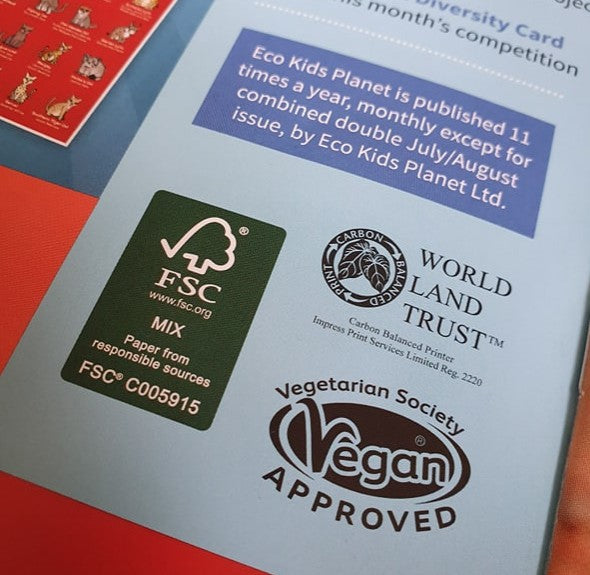
This is why forests are often called the ‘lungs of the planet’. Forests are home to hundreds of thousands of different plants and animals. They are wonderful places to visit and you can do lots of things such as building dens, exploring and cycling. That’s why at Eco Kids Planet, we are passionate about ensuring that we only use paper that is sustainable and responsible. All of our magazines, letters and envelope use FSC certified paper. We believe this is the right thing to do because:

What does FSC mean to Eco Kids Planet Magazine?
Our magazine is only printed on material that is a mixture of FSC certified forests, recycled material or other controlled sources.
Here is what one of our readers, Lyra, thinks about us using FSC paper.


"I am very grateful for Eco Kids magazine but I, Lyra Matilda, have realised that they
FSC means Forest Stewardship Council.
FSC says cut trees! Plant trees! Look after animals and humans they say!
Lyra says to look for the FSC label!"
Want to know why else we are the BEST children's nature magazine? Check out our 10 reasons here.
Comments will be approved before showing up.

This competition asked you to design a secret egg hidden somewhere in nature, and your entries went far beyond the obvious nests and burrows. Eggs arrived disguised as pine cones, floating on leaf boats, perched on volcano ledges, tucked into cloud cover and even masquerading as chocolate Easter eggs to fool foxes. Thank you to every reader who took up the challenge and thought like a parent bird, fish, reptile or imaginary creature trying to keep their precious egg safe.

We were swept away by the response to this competition. Letters arrived from rivers across the world – the Thames, the Mississippi and many more unnamed waterways – each one brimming with personality, passion and a genuine love of the natural world. You gave your rivers voices that were worried, hop...

Somewhere beneath a grassy field right now, a tiny insect is building an underground loudspeaker. Male mole crickets engineer horn-shaped burrows that amplify their calls hundreds of metres into the night air – and your child can recreate the same science at home using nothing but cardboard and a phone. This hands-on experiment explores sound, shape and natural engineering in a way that is genuinely surprising. No screens, no special equipment, just a brilliant idea borrowed from nature.